
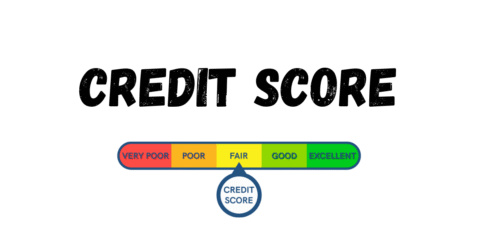
A credit score is a financial profile of your finances expressed as a number. This number, your credit score, is used to assess your creditworthiness.
Credit reference agencies use financial information up to 7 years old to build your credit score. 35% of your score is built from your payment history, 30% from your credit utilisation, the Average age of your Credit, 15%. Your Types of Credit is 10%, and your Credit request enquiries are 10%.
Credit Reference Agency
A Credit Reference Agency is an organisation that builds a profile on you and your finances. Banks, Financial Institutions, Utility companies and Landlords use Agencies like Equifax, Experian and TransUnion to verify your identity. Where you live, your voter registration status, your financial history and your financial commitments. Having a good, verifiable residential and financial history will increase your credit score, making it more likely that you will be able to receive credit in the future.
Each credit reference agency has its own rating score system. A high score is better than a low score.
Each score system is split into ranges: poor, good and excellent
Equifax 0 – 1000: excellent, very good, good, fair, poor
Experian 0 – 999: excellent, good, fair, poor
Transunion 0 – 710 : excellent, good, fair, needs work
An excellent credit score with one agency will likely be translated across all agencies.
It is unlikely you will have an excellent credit score with one agency and a poor credit score with another agency. This is provided that the agencies have up-to-date information on you. So you should make sure the information all the agencies have on you is correct and up to date. It should be noted that it can take 4 to 6 weeks for your credit report to be updated. Each lender can use one or multiple credit reference agencies, along with its own lending criteria, to process finance applications.
Good Credit
To have a good credit score, you need to have a good payment history of regular on-time payments, for mortgages, loans, credit cards, or anything where you have a  financial agreement to purchase any item or service. This can include utility bills, rent, mobile phone agreements and car insurance. Your monthly payments are reported to the Credit Reference agencies Equifax, Experian and Trans-Union. This is how credit reference agencies use your payment history to build your credit score.
Credit Utilisation
How you use your credit is also important; this is called Credit Utilisation. Credit Utilisation is the amount of credit used from your total available credit limits. You should keep your Credit Utilisation below 25% of your total credit limits. For example, credit card A has a credit limit of 2,000 and credit card B also has a credit limit of 2,000. Your total credit limit is 4,000.
Using more than 25%, 1,500 in this example, will lower your credit score, because this can imply you are relying too much on credit to get by. Credit Utilisation also works on individual credit limits. For example, using more than 25% of the limit on credit card A, say 750, will also lower your credit score, even though your total credit limit is 4,000. However, spending 1000, 500 on Credit card A and 500 on Credit card B will not lower your credit score.
Bad Credit
 You will have a low credit score, "bad credit!" If you fail to keep up with payments on mortgages, loans, credit cards, or anything where you have a financial agreement to buy any item or service. Failure to make payments on time, or not at all, is reported to the Credit reference agencies. This lowers your credit score, making it difficult for you to receive credit in the future. Continued failure to make regular payments can lead to a credit default and/or a court order being issued against you.
Defaults
A default is issued when you fail to make the agreed-upon regular payments on your credit agreements over a set period. If a company issues a default against you, the default is reported to credit reference agencies. The default is recorded in your credit report and will stay in your credit report for up to seven years, whether or not you pay off any outstanding owed balance. Having a default will lower your credit score, greatly impacting your ability to obtain credit. If, however, you pay off or arrange payment within 14 days of the default date. The default will not be recorded in your credit report.
Court Order
 A court order is issued when a creditor, which can be a bank, utilities, credit card or finance company, takes you to court to recover a debt owed to them.
If the court declares you owe the debt, this will be recorded in your credit report with credit reference agencies, lowering your credit score. The court order can stay on your credit report for up to 7 years. The court order will outline how much you owe, who you owe the debt to, how to pay, and to whom to make the payment. Payment can be made in full or in instalments. If you still fail to make payments, the creditor can apply to the court to have bailiffs sent to your home or business to collect items for resale to pay the outstanding debt; however, if the debt owed is paid in full within a month of the court order. The court order can be removed from your credit report.
Credit Repair
If you have a Court Order or a Default issued against you. That is not paid in full within the grace period. It may still be possible for you to obtain credit. The interest you pay on your credit purchase is likely to be much higher than normal. This is because you are seen as a high-risk applicant. First, you will need to repair your credit. This is done by first paying off the debt connected to the Default or Court Order. Once the debt has been paid in full. You or your creditor should inform the credit reference agencies that the debt has been paid in full. The credit reference agencies will then mark the debt as "satisfied". This, in turn, will increase your chances of receiving credit in the future.
Financial Planning
Understanding how the credit score system works will help you achieve a good credit score. A good credit score will go a long way towards you being approved for a mortgage or car finance.
However, beware that when paying for car insurance monthly, you are actually taking out a loan. The same can be said for mobile phone agreements; you are spreading the cash price over several months, with interest. This is why missed or late payments on these types of purchases can impact your ability to obtain a mortgage or car finance if you eventually decide to finance these items.
It's a good idea to have at least 18-24 months of on-time payments. This shows any future lender that you are a reliable applicant, with the ability to manage your finances and pay back on any finance agreement. Achieving a 24-month on-time payment history can be done by automating your bill payments from your bank account. It is also a good idea to have at least 1 to 3 months of future bill payments in reserve in your bank, just in case any financial problems occur. This should minimise the possibility of missed payments.
Credit Score Building
 If you don't have a credit history, meaning you have never taken out a finance agreement in the past, your credit score will be average. While you will be able to obtain a finance agreement with an average credit score, the interest rate you pay is likely to be higher than if you had a good or excellent credit score. To increase your credit score, you will need to build a payment history. In this case, you can apply for a credit-building credit card, paying it off in full each month. Clearing your credit card outstanding balance each month is one of the ways you can show future lenders that you know how to manage your finances.
Until next time, Know Your Business!
Mentioned




