
I covered IBAN ” International Bank Account Number” in Part One of my port series “The Creator Financial Toolkit.” Has a continuation of the series, I will go more in-depth on the subject of financial International Payments transaction protocols.
Having a good understanding of the protocols regarding funds transfers will speed up your transactions and save you money.
Operating in a global economy, you will have clients and customers who are located in different regions of the world.
Transfers
The basics of transfers are that there are two types of transfers. Internal (Domestic) and external (International Payments).
Domestic transfers are funds transfers within a country, and external transfers are between two countries.
Internal Payments
To make funds transfers within the United Kingdom, you require a Sort Code and a Bank account Number
Example:
Sort Code: 12-34-56
Account Number: 12345678
The sort code consists of 6 numbers and the account number consists of 8 numbers.
With the sort code the first 2 numbers refer to the bank or financial institution where the account is held. The last 4 numbers refer to the branch of the bank or financial institution where the account is held.
The 8-numbered account number is the account within a branch.
The internal payment methods for sending payments in the United Kingdom are:
BACS “Bankers’ Automated Clearing Services”
BACS Payments take up to three days to reach the receiving bank account.
FPS “Fast Payments Service”
FPS payments are available in the receiving bank account within a matter of minutes.
CHAPS “Clearing House Automated Payment System”
CHAPS is used for high-value transactions like paying for a property, etc. Using CHAPS requires paying a fee, while BACS and FPS do not.
Internationally, most countries and regions have similar payment methods for internal payments.
In the United States of America, the internal payment method is called ACH, “Automated Clearing House”
External Payment
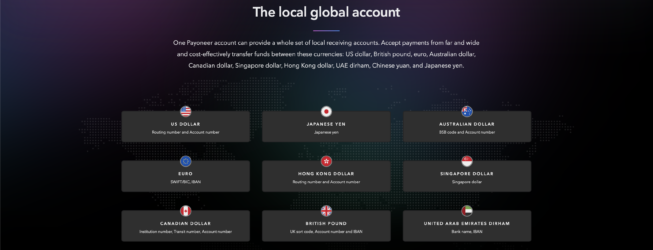
For the Eurozone SEPA “Single Euro Payments Area” is used. This payment method makes cross-border payments within the European Union and surrounding countries more like internal payments.
To achieve this the IBAN ” International Bank Account Number” standard is used.
Each country has a unique country code which is then followed by the country’s internal bank account number.
The United Kingdom is no longer a part of the European Union, however, the United Kingdom does support SEPA payments. The caveat is that SEPA only supports the EURO currency. Any SEPA payment to a GBP bank will require a currency conversion, which will incur a fee. Euros paid into Euros bank held in the United Kingdom will not incur any fees.
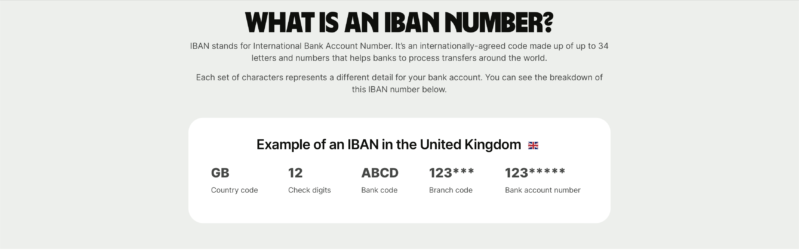
A United Kingdom IBAN is formatted as:
Internal UK Payments
Sort Code: 12-34-56
Account Number: 12345678
SEPA Payments into the UK
GB-29-NWBK-123456-12345678
(GB29NWBK12345612345678)
- GB Great Britain
- 29 is for a sanity check
- NWBK is the receiving bank code.
- 123456 Receiving bank branch code
- Branch Bank account number
“Noted, Revolut IBANs vary from this standard format when it comes to the sort code and account number section of their IBANs. Ultimately, Revolut uses one IBAN no matter how many currencies are held. Wise, on the other hand, issues an IBAN for each currency account held.”
Over time, more and more countries are starting to support the IBAN Standard.

SWIFT Payments
Swift “Society for Worldwide Interbank Financial Telecommunication
The global standard for cross-border transactions.
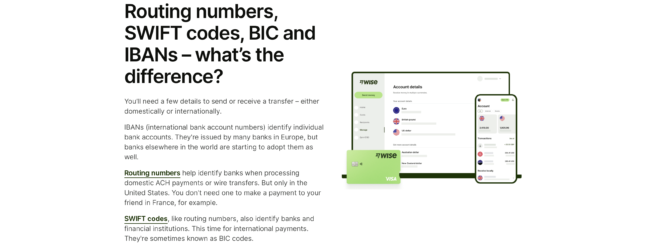
In addition to the account number and sort code or routing number. You will require the SWIFT/BIC code of the receiving bank. The SWIFT/BIC code identifies the receiving bank and its location globally.
BIC “Bank Identifier Code”.
In some circumstances, a BIC code for an intermediary bank or financial institution is required. An intermediary BIC code is needed when the sending bank does not have a subsidiary in the country of the receiving bank.
The methodology behind this is the sending bank does not have a sister bank in say America. So the sending bank creates a partnership with a bank in America to distribute payments to American bank accounts. The intermediary BIC code is used to identify the sending bank’s partner.
The downside is that at every stage in the transaction fees are applied.
One way to lower the amount of fees paid would be to convert GBP(£) to USD($) within say Wise then send the USD($) as a local transaction within America.
Each country and region has their variation of domestic and international payments. Understanding how they work with your country and region will save you money in the long run. Mostly, what I covered in this post will cover most of the global economy.
Mentioned




